


Carrion
4.21.16K Reviews
App Specs
- Version
- 1.0.44
- Updated On
- License
- Free
- Downloads
- 1,000,000+
- Developer
- DevolverDigital
- Categories
- Action
- Platform
- Android, iOS
Screenshots
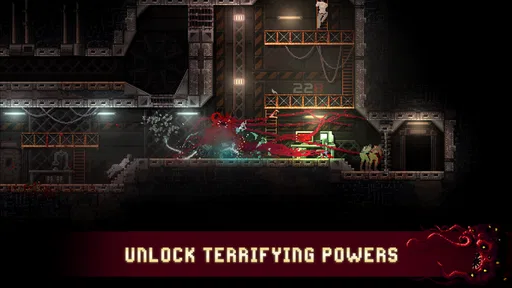
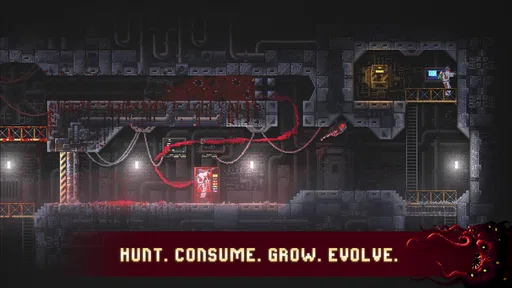
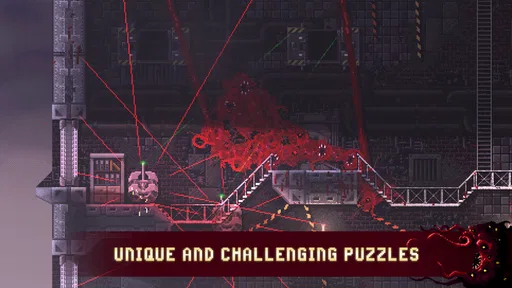

 Analysis by AppCompare
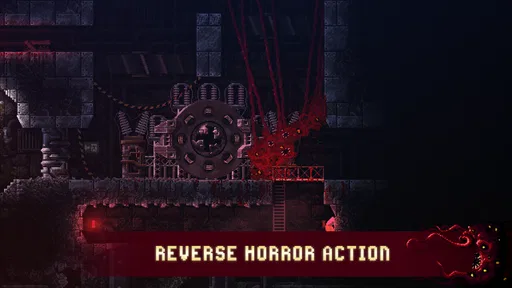
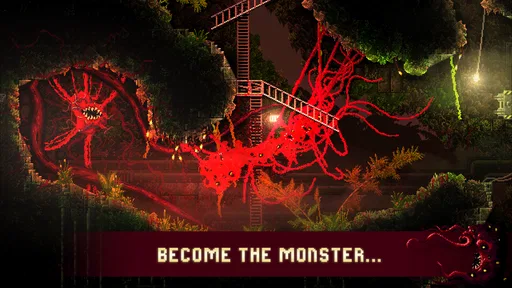
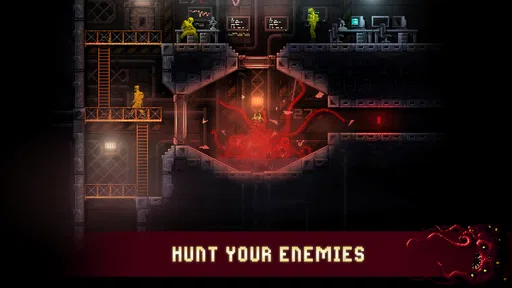
Carrion is the kind of action game I recommend when you want something direct, strange, and completely different from the usual heroic adventure. Instead of controlling a soldier, explorer, or chosen warrior, I play as a shapeless creature escaping from a heavily guarded research facility. The basic idea is simple: move through the complex, hunt people, consume them, and become more dangerous as the escape continues.
That reversal changes the mood of every room. I am not searching for a way to protect civilians or collect treasure. I am looking for openings, isolated targets, useful routes, and enough space to grow before the next security response arrives. The result is a compact-feeling action experience built around movement, surprise, and controlled chaos. It is also deliberately violent, so the Mature 17+ rating is important rather than decorative.
How the current version feels to play
DevolverDigital presents this as a free action game, and the current Android release is version 1.0.44. It arrived on October 30, 2024, and its presence is already substantial: the game has passed one million installs, with an average rating of 4.2 from around twenty-eight thousand ratings. Those figures do not replace personal experience, but they do suggest that the mobile edition has found an audience beyond a small experiment.
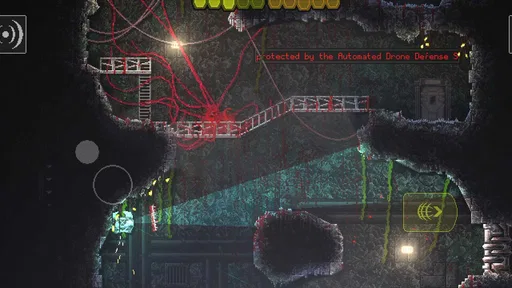
My first impression is that the game understands its central fantasy immediately. The creature is not merely a monster reskinned into a familiar platformer. Its body, movement, and attacks are the main puzzle-solving tools. I squeeze through spaces, climb surfaces, drop into rooms from above, and use the environment to keep humans from organizing a clean response. The best moments come when a plan starts as a quiet infiltration and ends with the entire room collapsing into panic.
The game is especially effective because it does not make the creature feel permanently invincible. Growing stronger helps, but careless movement can still create trouble. Security systems, confined spaces, and groups of enemies force me to think about timing instead of simply rushing forward. That balance is what keeps the predatory role interesting. If every encounter were just a button-mashing exercise, the novelty would wear off quickly.
A control scheme that needs a little patience
On a phone, controlling an amorphous creature is both the game’s most distinctive strength and one of its biggest challenges. Touch controls can feel natural when I am sliding through a corridor or crawling along a wall, but precision becomes more demanding when I need to change direction quickly, strike a particular target, or escape through a narrow opening while under pressure.
I found it useful to treat the first few encounters as practice rather than trying to play perfectly. The creature’s shape and momentum take a moment to read, especially if you normally play action games with a human character whose movement is more predictable. Once that adjustment happens, the controls become less about memorizing complicated commands and more about anticipating where the body will be a moment later.
Worth Reading Before You Choose

EA SPORTS FC Mobile 26 Is a Bigger Football Game, but It Takes Time

Flipboard Shows What News Apps Must Do Beyond the Feed

Switching to Android Auto Means Rethinking Your Driving Routine

Google Calendar Makes a Crowded Week Easier to Manage

Ludo King Makes the Most of the Minutes Between Plans

Baby Panda World Brings Quick Play to Modern Phones, but Its Game Library Feels Busy
That learning curve matters for anyone deciding whether to play on a small phone screen. The game is more comfortable when the display gives the action enough room to remain readable. On a larger phone or tablet, the creature’s position and nearby threats are easier to follow. If your hands already cover much of a compact screen, some tense sequences may feel harder than they would on a larger device.
The facility is a playground, not just a series of rooms
The setting works because it gives the creature several ways to approach danger. Corridors, rooms, barriers, and vertical surfaces create opportunities to attack from unexpected angles. I often get better results by watching a room for a few seconds than by entering immediately. A target that looks harmless in isolation may become a problem once nearby guards react.
One useful habit is to separate movement from feeding. It is tempting to consume the first available person, but sometimes the better decision is to slip past a target and preserve the element of surprise. In other situations, eating immediately gives the creature the strength or flexibility needed to survive the next section. That small choice turns ordinary movement into a constant risk calculation.
Another practical technique is to use the edges of the environment. Approaching through a wall or from above can reduce the number of directions from which enemies can respond. When I charge through the center of a room, I may win quickly, but I also expose myself to every threat at once. When I use corners, ceilings, and narrow passages, I can divide a larger encounter into smaller decisions.
This is one of the game’s less obvious strengths: it rewards reading the layout before acting. The store summary is short, but the actual appeal is not simply consuming enemies. It is learning how the facility’s geometry lets a creature behave like a hunter rather than a conventional fighter.
Growth changes the rhythm of the escape
The progression idea is easy to understand without making the game feel like a spreadsheet. Consuming people is tied directly to the creature’s development, so the core action and the sense of advancement point in the same direction. I do not feel as though I am completing unrelated chores to unlock the fantasy; the fantasy itself drives progress.
That structure also creates a useful trade-off. Hunting can make the creature more capable, but every attack creates noise and risk. Avoiding conflict may be safer in the short term, while confronting a dangerous group may be worthwhile if the reward helps with later obstacles. I recommend resisting the urge to treat every visible target as mandatory. The strongest route is often the one that combines selective aggression with careful positioning.
For returning players, the current version should be approached as a maintained mobile edition rather than as a completely different game. Version 1.0.44 is the release I found available, and the game’s appeal remains rooted in its original identity: movement through a hostile facility, predatory encounters, and evolution through consumption. I would not choose it expecting a social layer, a competitive mode, or a long list of conventional action-game systems. Its focus is narrower and more deliberate.
What the mobile edition gets right—and where it still asks for compromise
I find the mobile edition most rewarding when I treat each room as a small problem to read before acting, rather than a cue to rush in. Touch controls make that patience especially useful: deliberate movement can help me keep track of the creature’s position and choose a route, while frantic inputs can turn a manageable encounter into a messy one. That balance between convenience and precision is the trade-off I keep in mind as I look at what works well on a phone and where it asks for compromise.
Why it works well in short sessions
Carrion fits the moments when I have enough time for a meaningful burst of play but not necessarily an entire evening. A quick session can involve testing a new route, solving a difficult encounter, or simply replaying a section with a more aggressive approach. The immediate controls and strong visual identity make it easy to understand what I should be doing once I return.
That makes it a good choice for a commute, a waiting room, or a quiet break at home, provided you are comfortable with its mature horror and violence. I would not describe it as relaxing in the traditional sense, but it can be satisfying because the objective is clear and the action has a strong physical response. There is little ambiguity about the role I am playing or the kind of behavior the game expects from me.
It is also a good fit for players who enjoy games that let them feel clever without burying every idea under menus. The creature’s abilities and the facility’s structure create most of the decisions. If you like experimenting with routes, observing enemy behavior, and turning a defensive location into your own hunting ground, this game offers more depth than its simple premise suggests.
What may frustrate new players
The same focused design can feel restrictive if you want a broad action game with many character builds, equipment choices, or mission types. Carrion is not trying to become a general-purpose combat playground. Its identity depends on being a monster in a controlled environment, and that means the experience may feel repetitive to players who need constant mechanical reinvention.
The visual presentation can also be intense rather than conventionally attractive. The creature’s movements, attacks, and transformations are designed to make the player feel like an unsettling biological force. Anyone uncomfortable with body horror should skip it, even if they normally enjoy action games. The age rating is a genuine guide to the experience, not a minor warning.
Touch input is another consideration. I can play effectively with practice, but I would not call the mobile controls effortless for every player. Fast reactions are only part of the challenge; precise positioning matters just as much. If you prefer physical buttons for platforming and action, the mobile version may demand more adjustment than a traditional controller-based alternative.
There is also a difference between difficulty that feels intentional and difficulty that feels awkward. When I fail because I entered a room too quickly or ignored the layout, the lesson is clear. When a touch gesture does not register as I expected, the frustration feels less satisfying. Keeping movements deliberate and avoiding frantic swipes helps, but this remains a real trade-off of playing a creature-focused action game on a touchscreen.
Who should choose it over a usual action game?
I would choose this over a standard shooter when I want stealth, ambushes, and environmental movement rather than a collection of weapons. I would choose it over a conventional platformer when I want the character itself to be the main tool for exploration. I would also choose it over a typical horror game when I want to control the source of fear instead of hiding from it.
That comparison has limits. Players looking for open-world exploration, friendly characters, or a relaxing power fantasy will probably be happier elsewhere. Carrion’s pleasure comes from discomfort, improvisation, and the strange satisfaction of turning a secure facility into a place where the humans are no longer in control.
For a realistic everyday scenario, imagine having a short break after work and wanting something more focused than an endless competitive match. I might play a few rooms, try a different approach to a security encounter, and stop after reaching a natural pause. The game gives that session a clear purpose, while still leaving room to experiment. On a longer weekend session, I would pay more attention to alternate routes and the timing of attacks rather than simply pushing forward.
Practical advice before you install
The game is free, which removes the usual purchase decision, but it does not remove the question of fit. I would first consider whether your phone has enough screen space for precise movement and whether you enjoy mature biological horror. The minimum operating system is Android 6.0, so the software requirement is relatively accessible, but the playing experience still depends heavily on how comfortable the device feels in your hands.
I also recommend playing with sound enabled when possible. The atmosphere is not just visual; tension comes from sensing that a room is becoming dangerous before the situation fully breaks down. If you are playing in a public place, headphones can make the experience more immersive, although the violent presentation may still be unsuitable around children or people who dislike graphic imagery.
Do not judge the game during the first few minutes solely by how unusual the controls feel. Give yourself enough time to learn how the creature occupies space. Think of the body as a flexible tool rather than a normal avatar, and use short, intentional movements until the handling becomes familiar. This approach helped me avoid the common mistake of treating every encounter like a direct fight.
For experienced players, the most rewarding self-imposed challenge is to improve efficiency rather than merely survive. Try entering rooms from different sides, decide which targets are worth the risk, and notice how a route changes when you delay an attack. These choices reveal the game’s deeper structure without requiring a separate difficulty system or a complicated build menu.
What I would watch as the game continues
The current release feels coherent because it does not dilute the central idea. If future updates arrive, the most valuable improvements would be those that make mobile control more dependable and preserve the clarity of the creature’s movement. I would rather see careful refinements to touch interaction and device comfort than additions that pull the game toward unrelated systems.
For existing users, that means the current version is worth revisiting when you want to test a route with better patience or a more controlled attack pattern. The game’s replay value comes less from collecting endless content and more from understanding spaces that initially seemed chaotic. A room that defeated me early can become surprisingly manageable once I stop treating it as a brawl.
New players should also know what kind of evolution to expect from the product itself. The release information establishes a current version and a recent mobile arrival, but I would keep expectations grounded: the reason to install it is the focused monster-escape concept already present, not a promise of a constantly expanding service. That distinction helps set the right expectations before starting.
My recommendation
I enjoyed Carrion most when I played it as a game of controlled predation. The creature is powerful, but the best results come from patience, positioning, and knowing when not to attack. That combination gives the action more personality than a simple “consume everything” premise would suggest.
With around twelve hundred written reviews and a strong average response from its player base, it has clearly connected with many people, and I can understand why. The concept is memorable, the environment supports experimentation, and the progression is tied naturally to the act of hunting. The free price also makes it easy to try without committing to a purchase.
Still, I would not recommend it to everyone. Skip it if graphic body horror is a deal-breaker, if you need precise physical controls, or if you prefer action games built around weapons, teamwork, or broad customization. Choose a more conventional platformer if you want bright exploration, or a standard horror game if you would rather feel vulnerable than become the threat.
For me, the final verdict is clear: this is a focused and memorable mobile action game for players who want to inhabit the monster. Its greatest strength is the way movement, hunting, and growth all serve the same unsettling fantasy. Once the touchscreen handling clicks, the facility becomes a place to study, exploit, and gradually dominate, and that is a far more interesting experience than the brief store description suggests.
Pros
- Distinctive reverse-horror gameplay lets you hunt rather than survive.
- Destructible environments make exploration and combat feel dynamic.
- Pixel-art visuals create a memorable
- gruesome atmosphere.
- Multiple abilities encourage experimentation with different attack strategies.
- Compact levels and checkpoints make progress easy to resume.
Cons
- Distinctive reverse-horror gameplay lets you hunt rather than survive.
- Destructible environments make exploration and combat feel dynamic.
- Pixel-art visuals create a memorable
- gruesome atmosphere.
- Multiple abilities encourage experimentation with different attack strategies.
- Compact levels and checkpoints make progress easy to resume.
FAQs for Carrion
What is Carrion, and what kind of game is it?
Carrion is a reverse-horror action game in which you control an amorphous creature escaping from a heavily guarded research facility. Instead of playing as a helpless survivor, you are the monster. You move through laboratories, vents, and underground areas, consume enemies, solve environmental puzzles, and grow stronger by absorbing victims. Its pixel-art presentation and unsettling atmosphere make it especially appealing to fans of unusual horror experiences.
Is Carrion available on Android or iOS devices?
Carrion is primarily known as a PC and console game, and official mobile availability can vary depending on the region, platform, and current publisher support. Before downloading anything, check the Google Play Store or Apple App Store for an official listing from a verified developer or publisher. Avoid unofficial APK files or suspicious copies, since they may contain malware, lack updates, or fail to provide the complete game.
How does the gameplay in Carrion work?
Gameplay focuses on fast movement, exploration, stealth, and combat rather than traditional shooting or character progression. You control the creature using tentacles to grab objects, pull enemies, break through barriers, and reach difficult areas. Consuming humans and other targets helps you grow, while certain abilities allow access to previously unreachable locations. The game also includes puzzles that require experimentation and careful use of your powers.
Is Carrion difficult for new players?
Carrion is generally accessible, but it can become challenging when several armed enemies, security systems, and environmental hazards appear at once. The creature is powerful, yet careless attacks can leave you vulnerable, especially in confined spaces. The game encourages learning enemy patterns and using the environment intelligently. Players who prefer relaxed exploration may find some encounters demanding, while action and puzzle fans will likely appreciate the challenge.
Does Carrion contain disturbing or mature content?
Yes. Carrion is designed as a horror game and contains graphic violence, blood, body horror, and scenes involving humans being attacked or consumed by the creature. Although the visuals use pixel art rather than realistic graphics, the subject matter can still be disturbing. It is better suited to mature players who are comfortable with intense horror themes, unsettling sound effects, and a gameplay concept centered on hunting and destruction.


